The trees of San Antonio, and what actually goes wrong with them.
Eleven trees account for almost every yard in San Antonio and the Hill Country. Three of them are oaks and can get oak wilt; the other eight cannot, which means that if the tree in question is a pecan, a cedar elm, an Ashe juniper or an Arizona ash, oak wilt is not the explanation and the February-to-June pruning restriction does not apply to it. Pick a tree below to see photographs of the tree and its leaf, how to recognize it, how it fails here, and what the work involves.
Published 2026-09-04 · Last reviewed 2026-09-04 · Oak wilt guidance follows the Texas A&M Forest Service.
11 trees
Live oak
Quercus fusiformis / virginiana
Also called: Texas live oak, escarpment live oak
Oak wilt: SusceptibleGreen year round
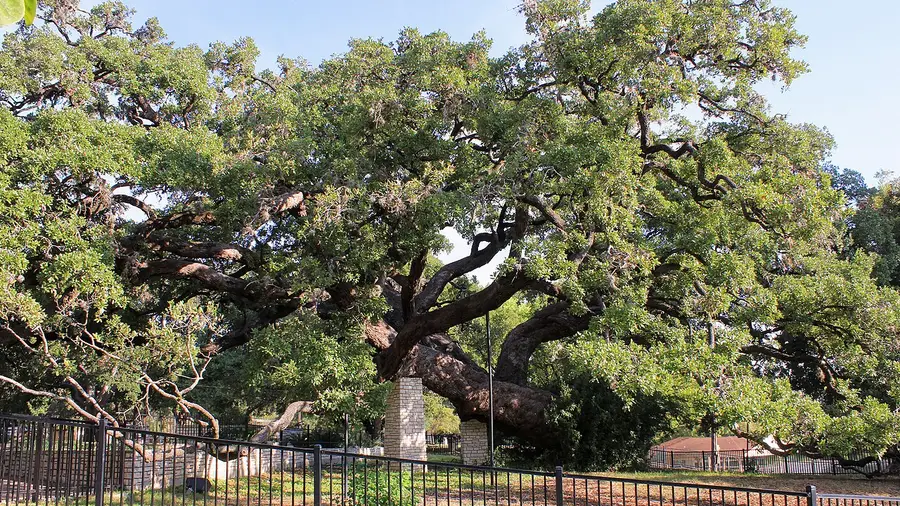
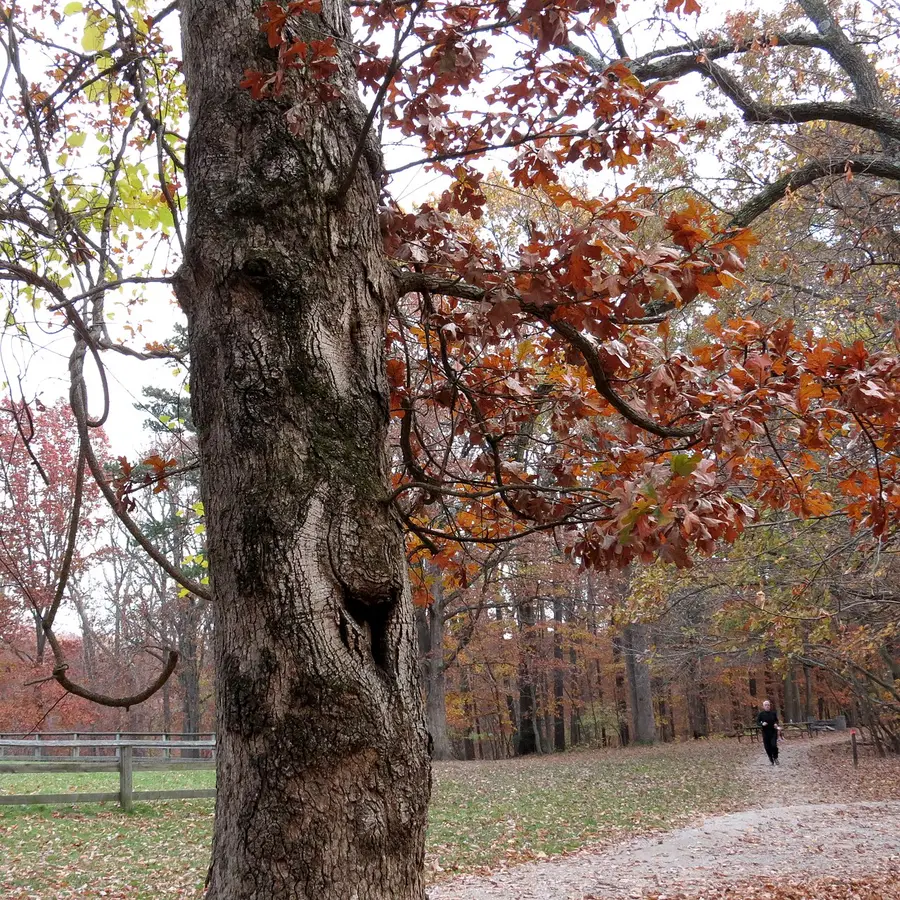
Wide, low, spreading crown that holds its leaves all winter and drops them in one go in early spring.
The whole tree
The Founders Oak in New Braunfels. The wide low spread on a short trunk is the live oak silhouette.
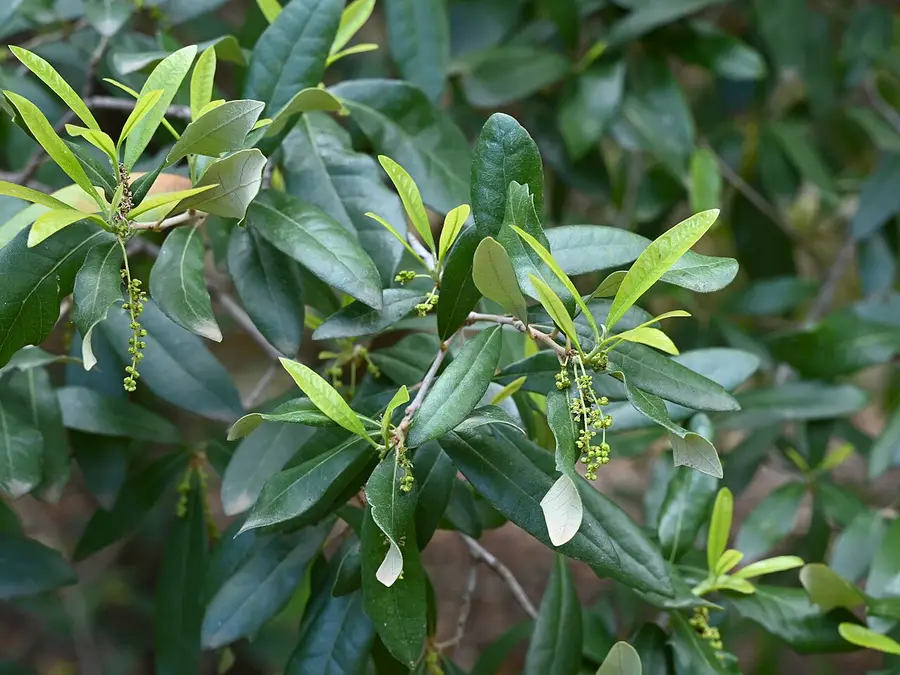
Small, leathery, oval leaves with smooth edges - not the lobed shape people picture when they hear oak.
Trunk often leans and forks low; mature yard trees carry 50 to 60 feet of spread on a 40-foot height.
Grows in mottes - clusters of trees whose roots have fused underground into one connected system.
Drops its old leaves in February and March, then leafs out immediately. That is normal, not decline.
How it fails here
Oak wilt is the main threat, and in live oaks it travels underground through those fused roots, which is why an infection spreads outward as a widening circle rather than jumping around a property. Structurally, the low forks are the weak point: a heavy limb over a roof with a tight, included-bark union is a storm liability long before it fails.
What the work looks like
Preventive propiconazole injection for high-value trees, trenching four to five feet deep to sever root grafts between a sick tree and its healthy neighbors, and structural pruning of heavy low limbs - done between July and January, never February through June.
The thing people get wrong
Leaf drop in late winter panics people every year. A live oak shedding in February is doing what it is supposed to do. Veins going yellow then brown while the leaf is still on the tree is the one to worry about.
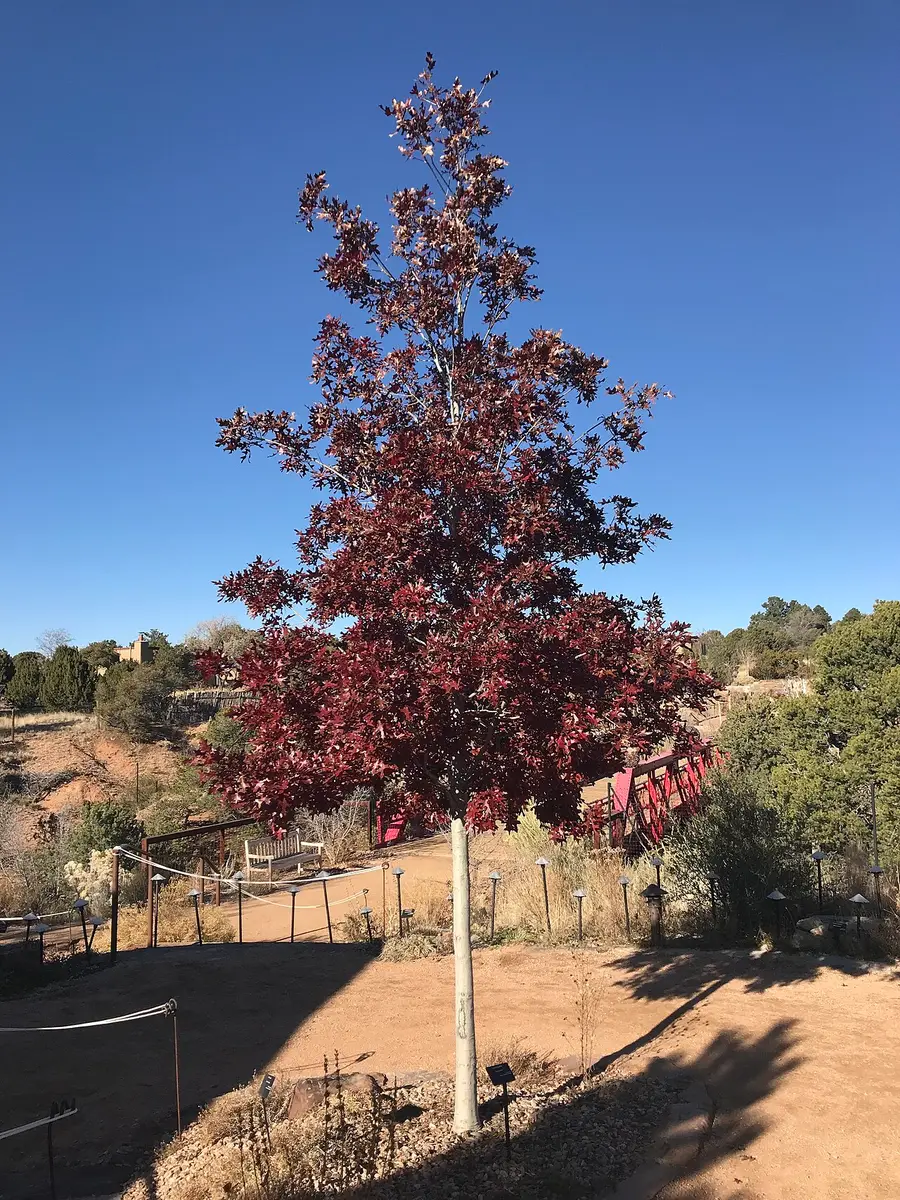
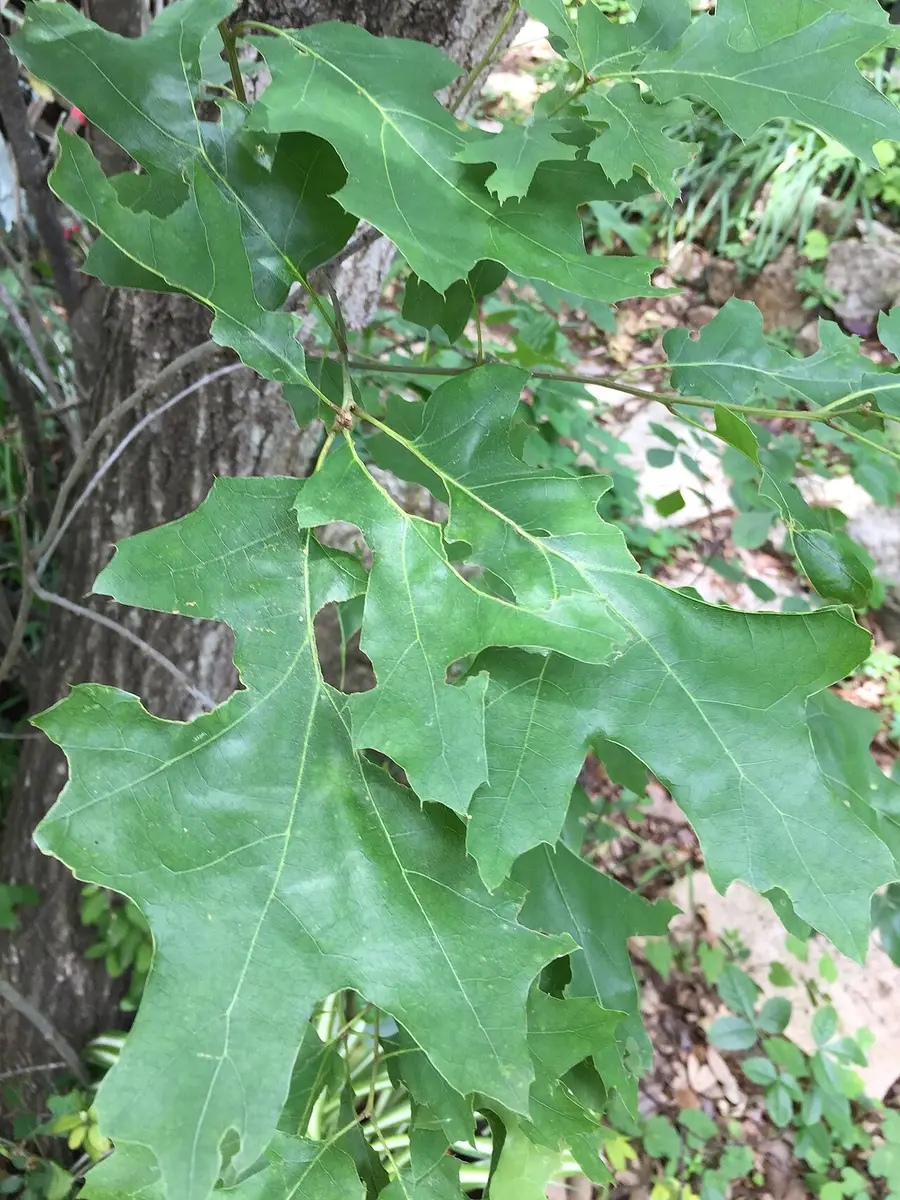
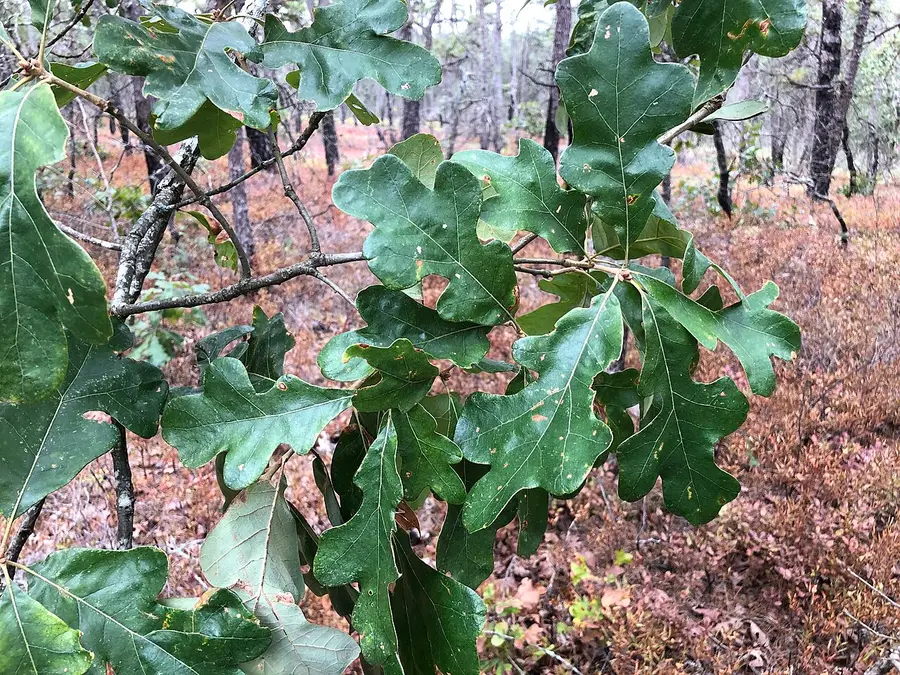
Lobes come to sharp points, unlike the rounded lobes of a post oak.
Darker, more furrowed bark than a live oak; blackjack oak bark is notably blocky and near-black.
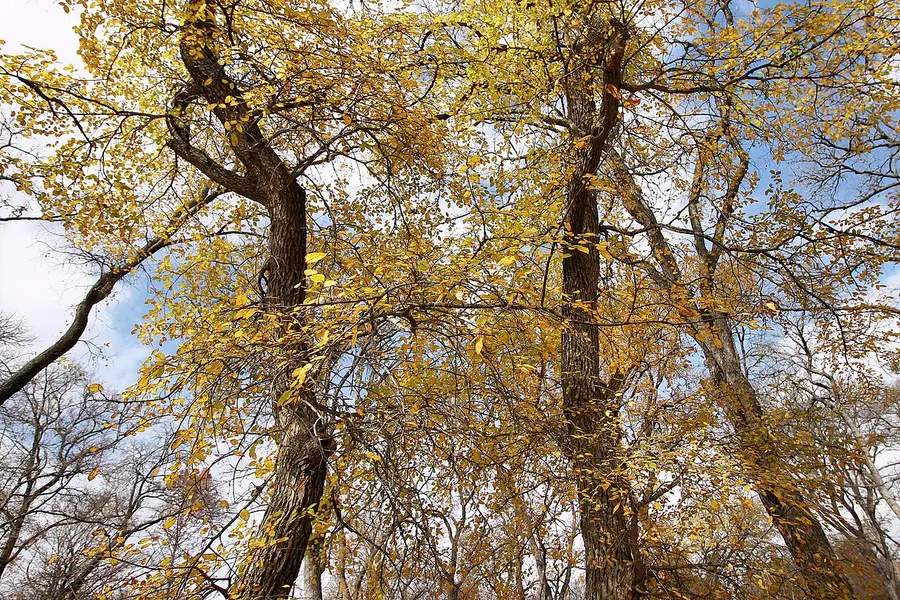
Fully deciduous - bare in winter, which is the easiest way to separate it from a live oak at a glance.
How it fails here
Oak wilt kills a red oak fast, often in three to six weeks from first symptoms. It is also the species that starts new outbreaks: the fungus forms spore mats under the bark of a dead red oak, sap-feeding beetles feed on them and carry spores to fresh cuts on healthy oaks anywhere in the neighborhood.
What the work looks like
A symptomatic red oak is a prompt removal, and the wood does not get stacked or shared - it is disposed of or sealed so it cannot form mats. This is the one case where speed genuinely matters rather than being a sales line.
The thing people get wrong
There is no cure for an infected tree, red oak or otherwise. Anyone offering to treat a red oak that is already wilting is selling something that does not work.
Thick, stiff leaves; the two middle lobes are wide and blunt, giving the cross shape.
Slow-growing with a stout, often gnarled trunk.
Common on older, undisturbed lots and at the edges of new development.
How it fails here
Root disturbance, more than anything else. A post oak will not tolerate grade change, trenching or compaction inside its drip line, and it often does not show the damage for two or three years - which is why a post oak dying next to a new build is such a common call.
What the work looks like
Honest assessment first. If the root zone was cut through during construction the decline usually cannot be reversed, and the useful conversation is about hazard and removal rather than treatment.
The thing people get wrong
People assume a slow decline must be disease. On a post oak near recent construction, the cause is usually something a bulldozer did three summers ago.
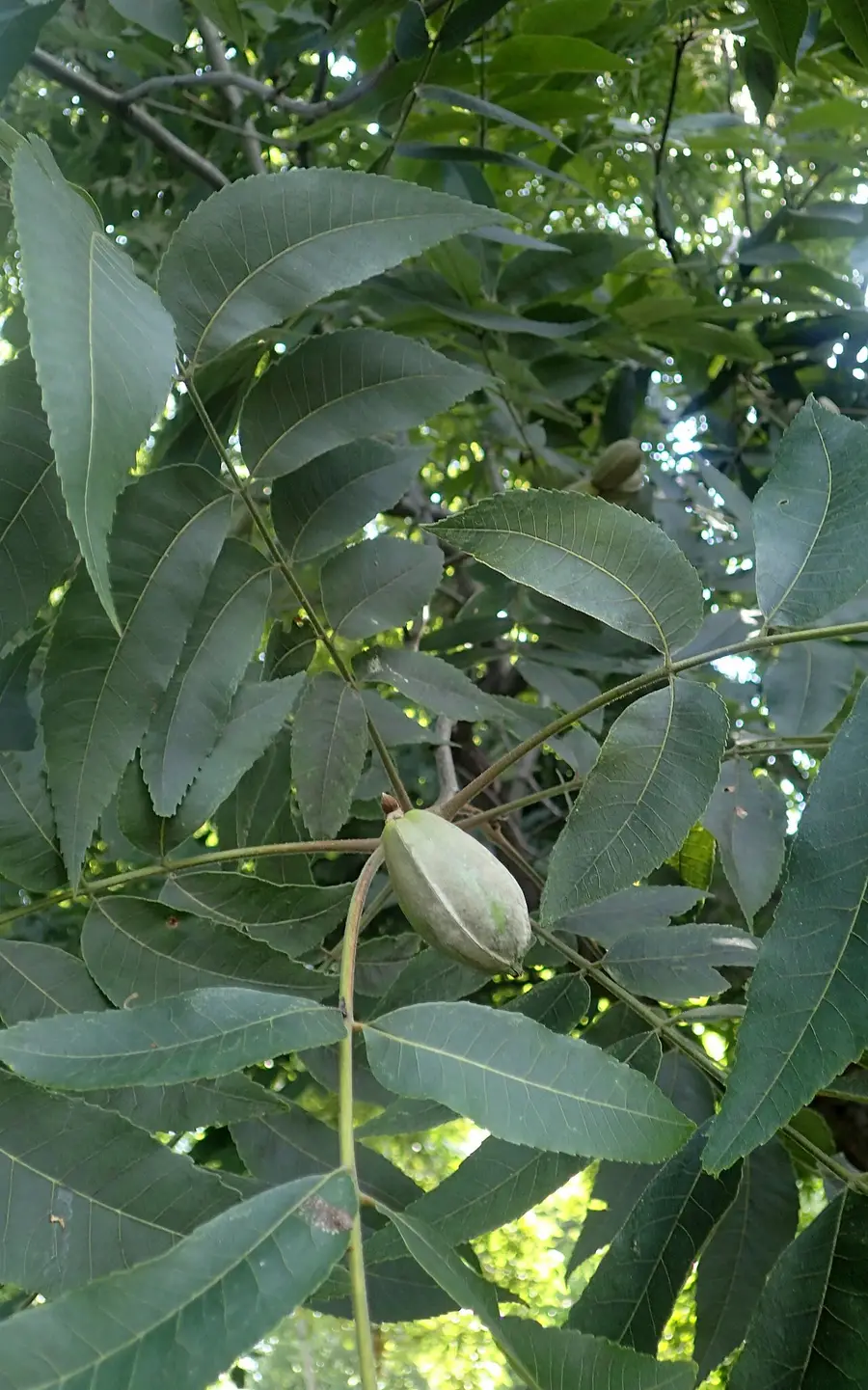
Compound leaves - one leaf is a whole row of leaflets on a stem.
Gray, ridged bark that plates and flakes with age.
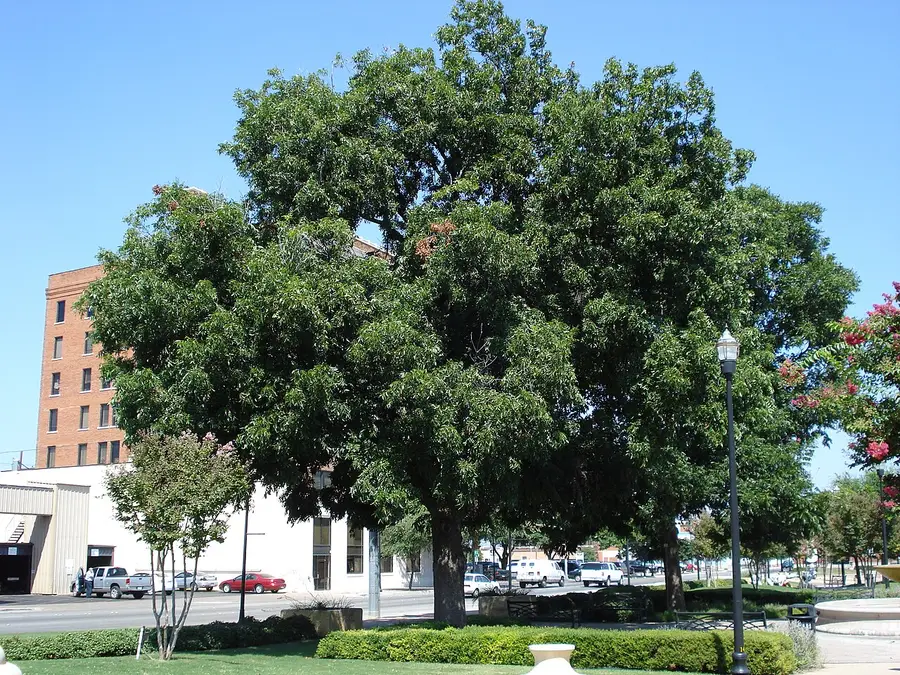
Nuts in autumn. The Texas state tree, and old yard specimens can top 80 feet.
How it fails here
Not by snapping mid-span. A pecan drops whole limbs at the union, which means it can look full and healthy from the street while carrying three or four attachments that will let go in the next straight-line wind. Aphid honeydew making everything below sticky is cosmetic, not a health problem.
What the work looks like
Selective reduction of over-extended limbs and inspection of the unions, not topping. Removals are rigging work because the wood is heavy and the drop zones on older lots are tight.
The thing people get wrong
Because pecans are immune to oak wilt, the February-to-June pruning restriction does not apply to them. A pecan can be worked in spring.
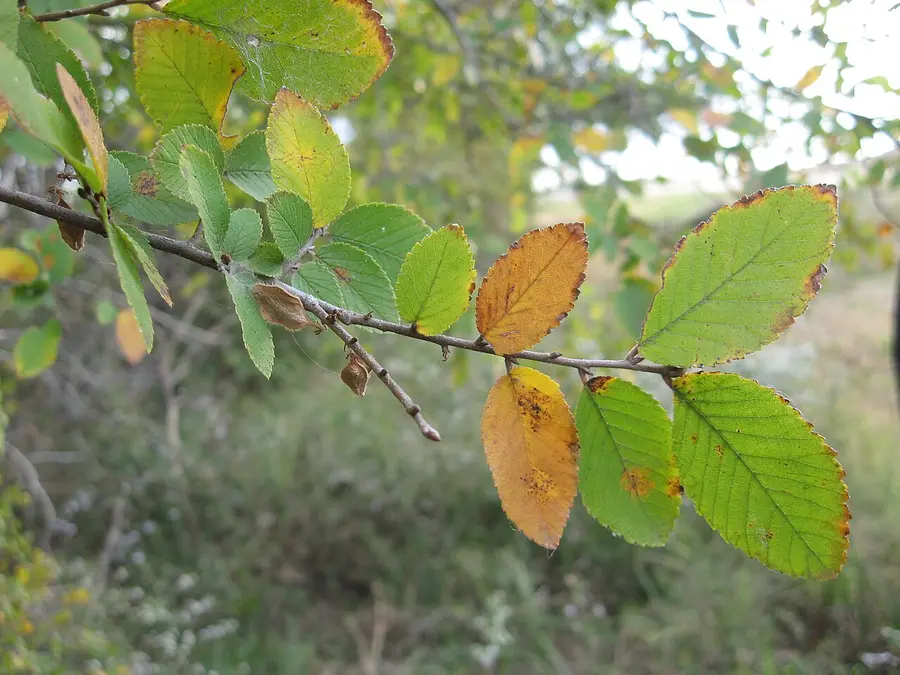
Leaves under two inches, thick and rough on top, with toothed edges.
Twigs often carry corky wings running along them.
Narrow, upright habit; flowers and seeds in the fall rather than the spring.
How it fails here
Heavier and more brittle than it looks. Cedar elms shed limbs unpredictably in wind, and they carry that weight further out than the crown suggests.
What the work looks like
Takes crown reduction well, though it calluses over differently from an oak and looks worse for a season before it looks better. Storm work on cedar elm is common and usually straightforward.
The thing people get wrong
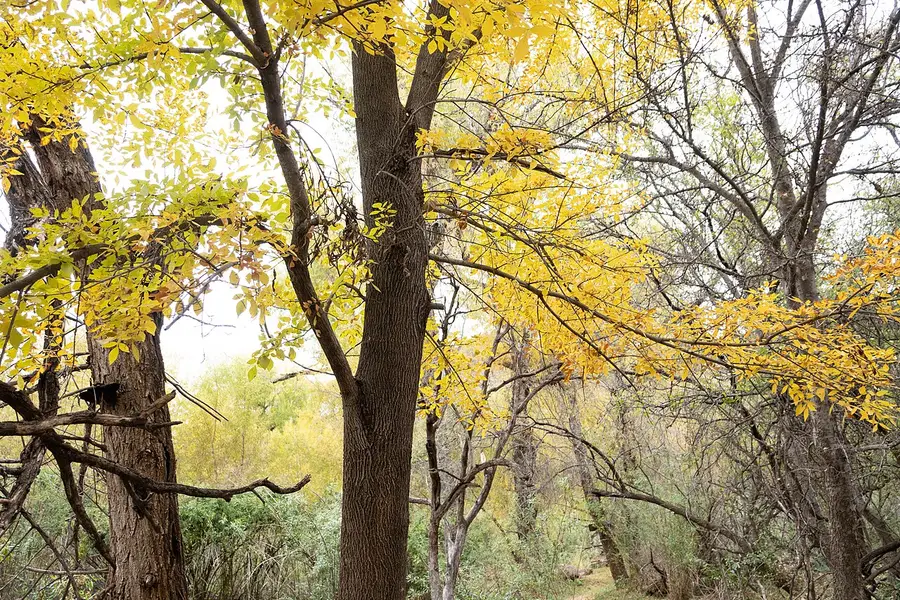
The most misdiagnosed tree in the area. Yellowing cedar elm is almost always water stress or cotton root rot, not an infectious disease - and it is never oak wilt.
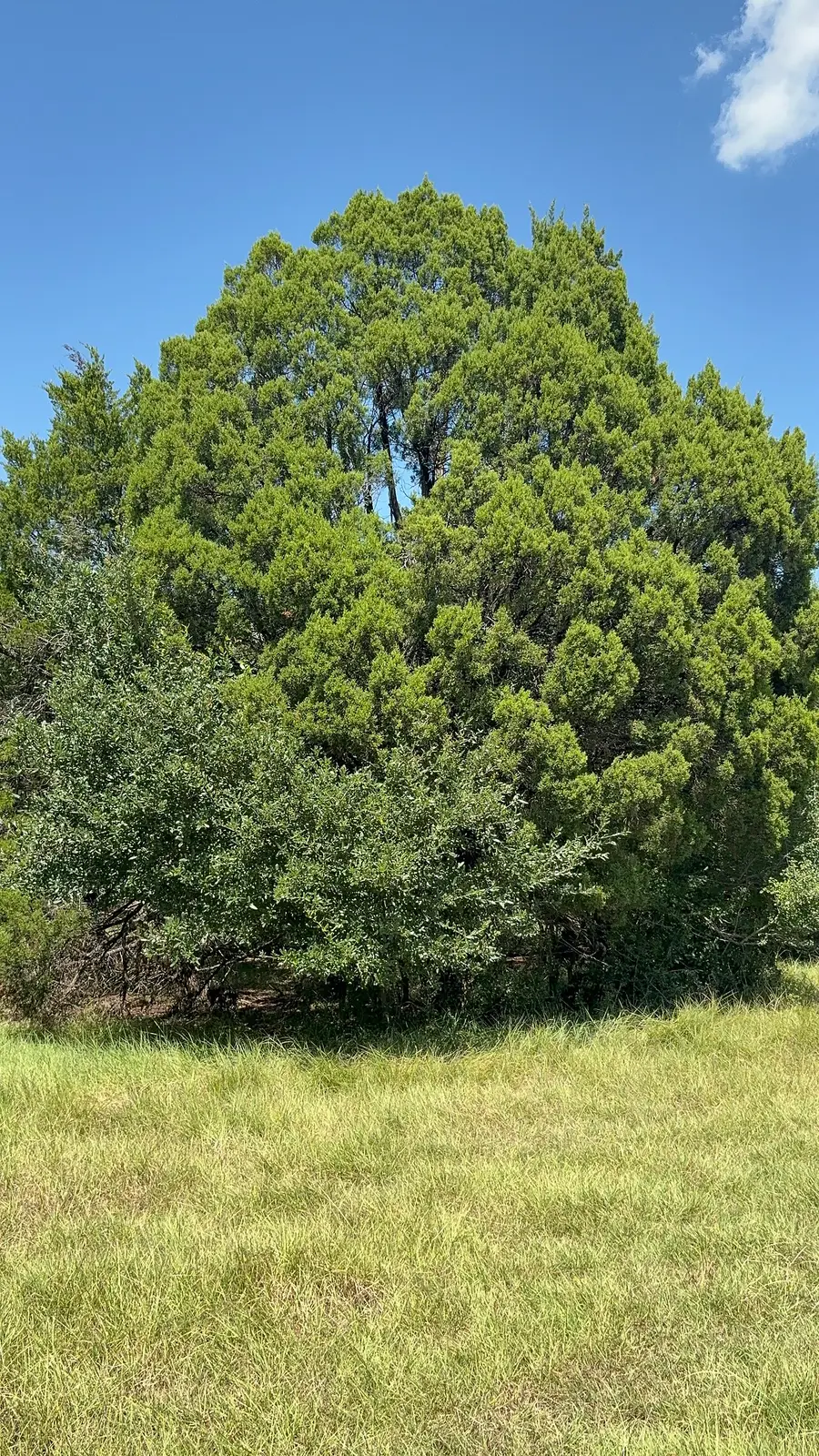
Scale-like leaves pressed flat against the twig, not needles.
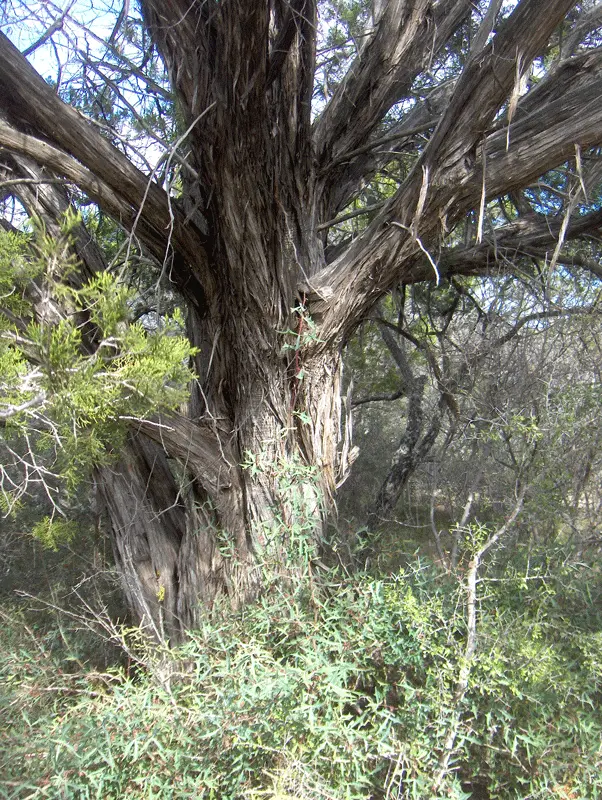
Shreddy, fibrous bark in long strips.
Rarely a single trunk - usually three to six stems fused at the base with bark trapped between them.
The source of the December-to-February cedar fever pollen.
How it fails here
Structurally it rarely fails on its own. The problem is what it does to everything else: it crowds a lot, hides declining hardwoods from view, and it has to be cleared along a route before a trench line can go in, which is what makes oak wilt trenching expensive on a Hill Country property.
What the work looks like
Clearing and thinning is a different job from hardwood removal - many small stems rather than one big one - and it is priced that way. Selective clearing that opens the canopy for the oaks is usually a better outcome than taking everything.
The thing people get wrong
It is the tree most people want cut, usually for the wrong reason. It is not part of the oak wilt problem - but clearing it is often step one in dealing with one.
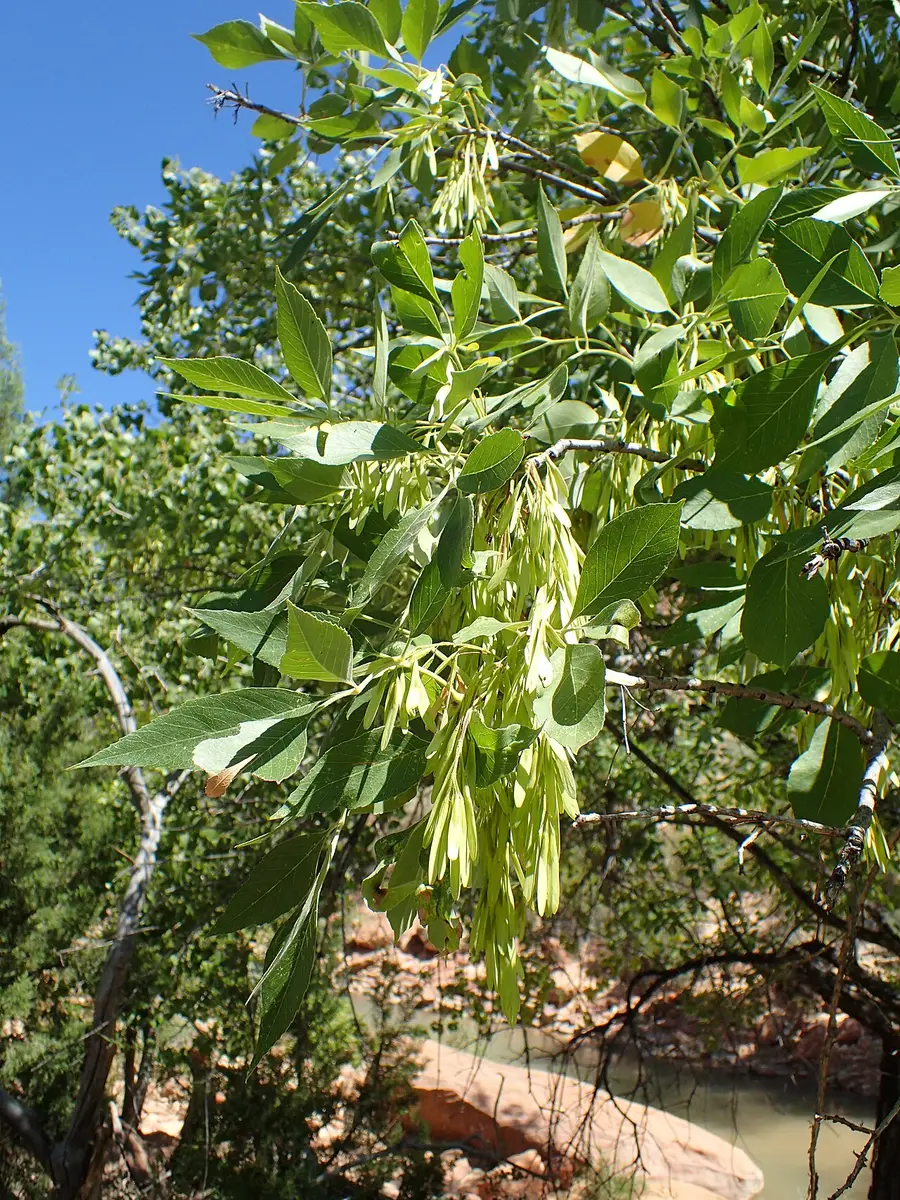
Compound leaves with 3 to 5 broad leaflets, opposite each other on the twig.
Gray, diamond-patterned bark.
Often the largest tree on a mid-century subdivision lot, and often visibly hollow at the main unions.
How it fails here
Decay at the branch unions, usually hollowing from the center out. Arizona ash was planted for speed, not longevity, and a 55-year-old specimen is a storm call waiting to happen. It is the tree most likely to put a limb on a car.
What the work looks like
Heavily represented in our storm cleanup. Removals are comparatively cheap because the wood is light and nobody rigs it delicately - but a large one over a house is still crane or bucket work.
The thing people get wrong
A hollow trunk does not automatically mean removal, but on an Arizona ash of this age it usually does. The species does not compartmentalize decay well enough to be worth saving.
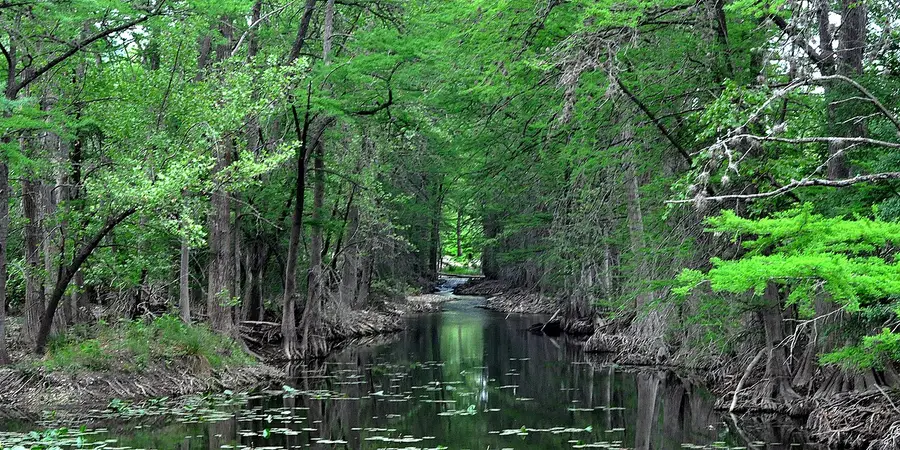
Deciduous conifer: the needles go rust-orange and drop in autumn, which alarms people every year.
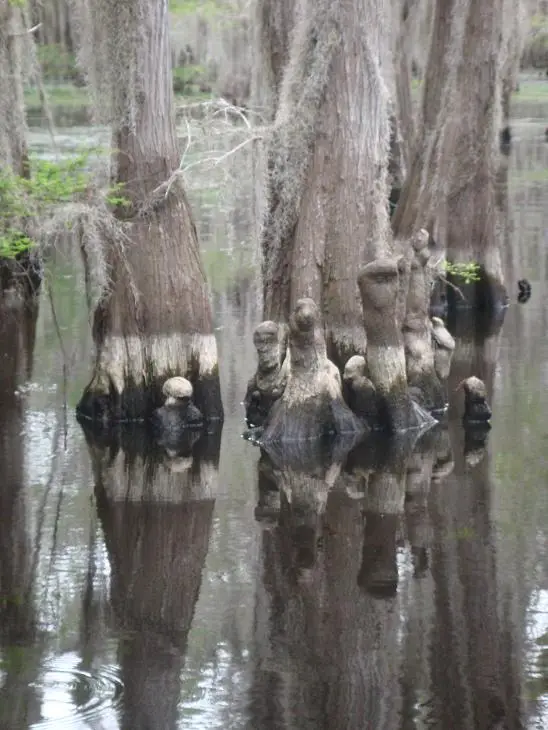
Fluted, buttressed trunk base; knees pushing up through the ground near water.
Along Cibolo Creek, the Guadalupe and the San Antonio River basin.
How it fails here
Rarely fails structurally. What looks like alarming decline on a cypress is almost always a water problem - either drought pulling the creek down or a change in drainage upstream.
What the work looks like
Usually the honest answer is that no work is needed. Deadwood removal over a patio or a path, and a conversation about watering.
The thing people get wrong
A bald cypress going brown in October is not dying. It is deciduous. Worth saying out loud before the customer panics.
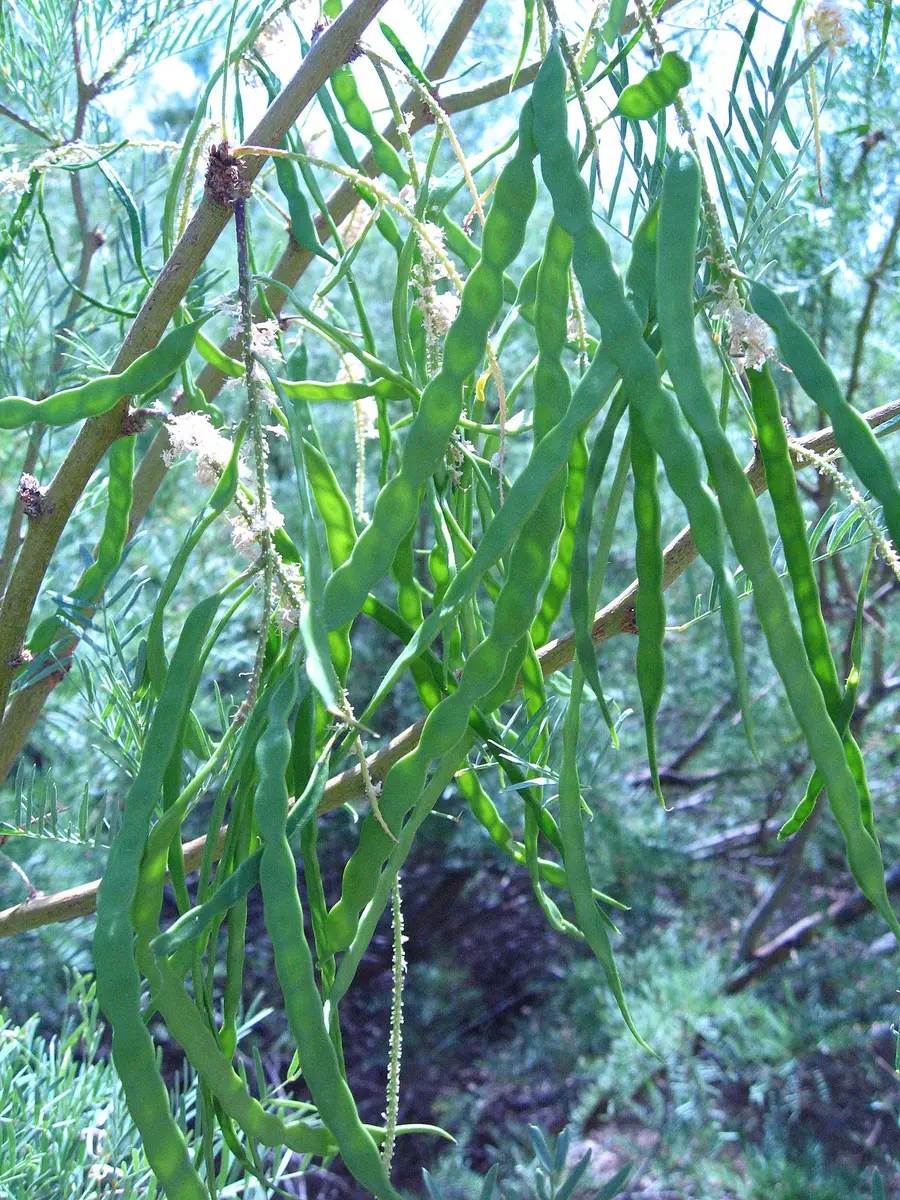
Fine feathery leaflets and long straw-coloured pods. The thorns on the twigs are the crew's problem.
Photo via Wikimedia Commons · Robb Hannawacker, while working for Joshua Tree National Park · Public domain
How to know it
Tiny paired leaflets that cast almost no shade.
Straight, sharp thorns at the leaf nodes.
Long seed pods in summer. Leafs out late - the local saying is that mesquite does not leaf until the last frost has passed.
How it fails here
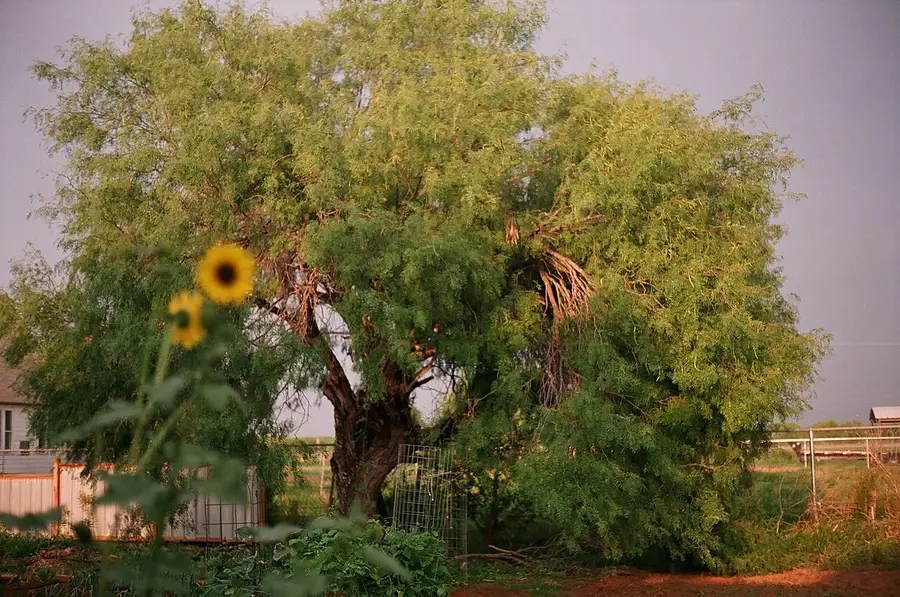
Splits at the base where the multiple stems meet. Common on thin caliche soil at the edges of the service area, and generally a low-value tree unless it is a specimen in a designed landscape.
What the work looks like
Removal or clearing. The wood is worth asking about - mesquite has real value for smoking and milling.
The thing people get wrong
A woodlot of mesquite, juniper and cedar elm all looking rough at once is drought and thin soil, not an outbreak of anything.
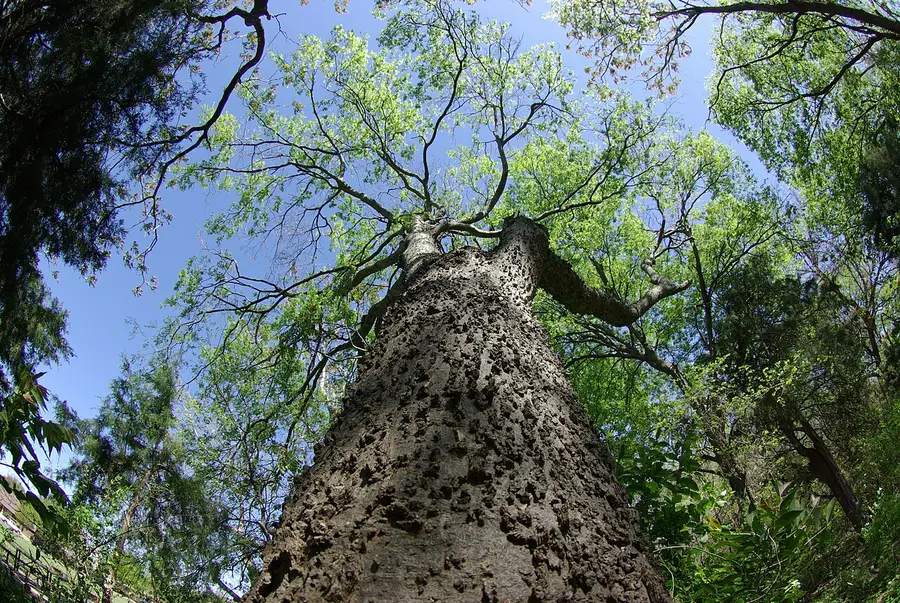
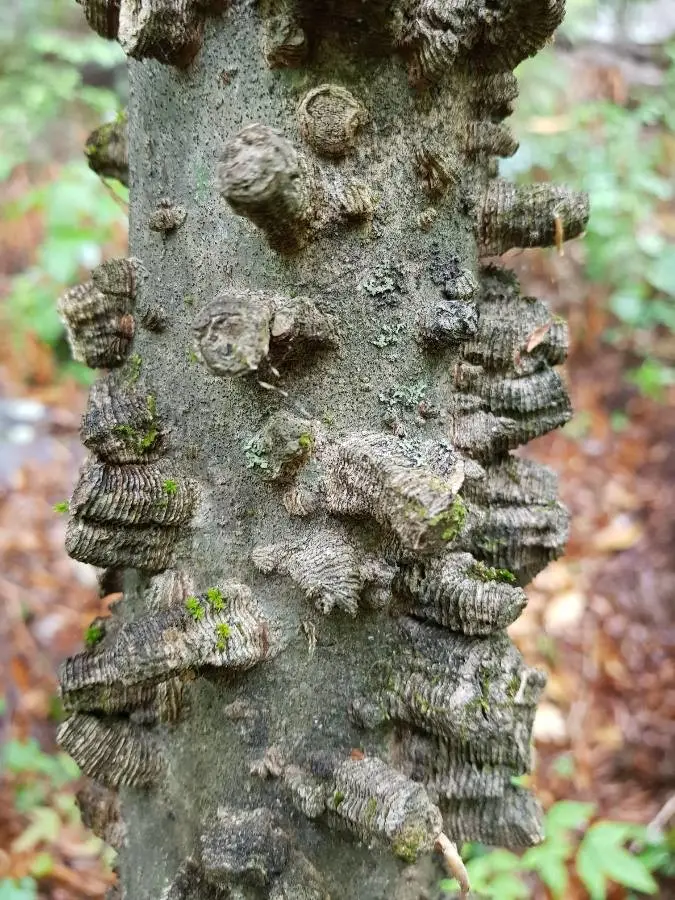
Hackberry: warty, bumpy gray bark - unmistakable once you have seen it - and asymmetric leaf bases.
Ligustrum: glossy evergreen leaves, usually a fused clump of five or six trunks.
Chinaberry: lacy compound leaves, lilac flowers in spring, hard yellow berries that persist.
How it fails here
Weak wood and bad structure from the start. A mature ligustrum clump can be six trunks fused at the base with a root mass wider than any one of them, which makes the stump work larger than the tree above suggests.
What the work looks like
Removal, and the quote is driven by the root mass and access rather than the height. Regrowth from the stump is the norm if it is not ground out.
The thing people get wrong
These look like small easy jobs and price like larger ones, because of what is under the ground.
Bradford pear: white spring flowers, tight upright branching, splits down the middle in wind.
Chinese tallow: heart-shaped leaves, brilliant fall color, spreads aggressively.
Crape myrtle: smooth mottled bark, summer flowers, usually multi-stemmed and small.
How it fails here
Structure, not disease. Bradford pear in particular is built from tight upright unions that split the tree in half in a storm, often at fifteen to twenty years old.
What the work looks like
Removal and replacement advice. Crape myrtle work is mostly correcting bad past pruning rather than anything structural.
The thing people get wrong
Topping a crape myrtle every winter is a habit, not horticulture. It produces weak whip growth and a worse tree each year.
Canopy thinning and branch dieback on an oak, often on one side first - close enough to oak wilt to fool anyone at a glance.
How to tell
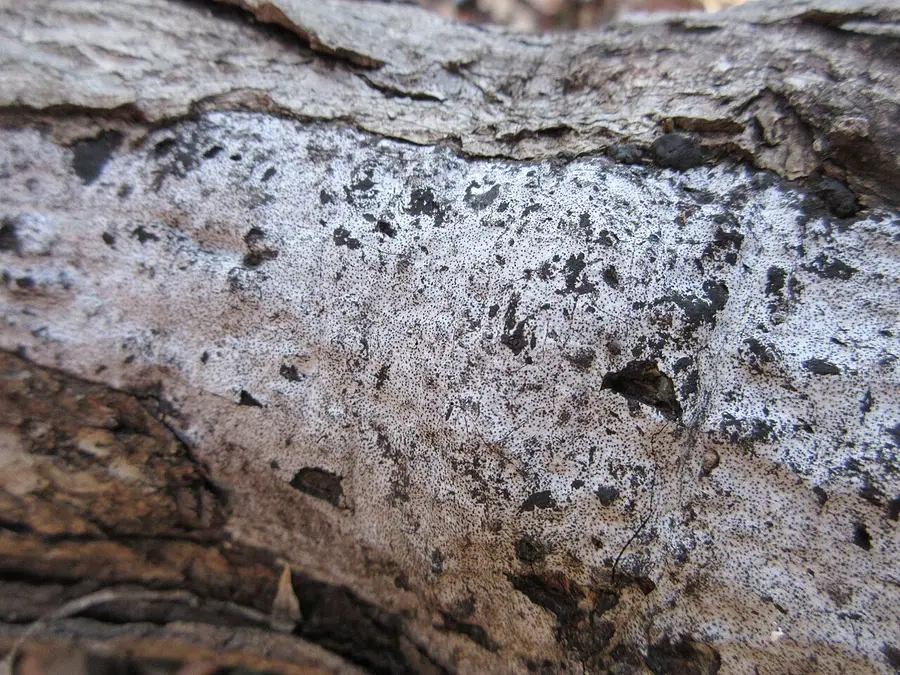
Look at the trunk, not the leaves. Bark sloughs off in sheets to reveal a tan-to-silver dusty fungal surface underneath. Oak wilt does not do that.
Can it be treated
No. It attacks trees already weakened by drought or root damage, and there is no injection or spray for it. The honest call is usually removal. Nobody should be selling a treatment against this.
Drought stress
Looks like
Thinning canopy, scorched leaf margins, dieback starting at the top of the tree.
How to tell
It is slower, more uniform and affects the whole canopy at once, rather than moving through it. Oak wilt in a live oak shows as veins going yellow then brown while the leaf is still attached.
Can it be treated
Yes, often. Deep watering at the drip line, mulch out to the canopy edge, and no fertilizer - feeding a drought-stressed tree makes it worse.
Cotton root rot
Looks like
Sudden wilting and death, sometimes over a few weeks, with the dead leaves staying attached to the tree.
How to tell
Soil-borne and common in the alkaline clay here. It hits a wide range of species - not just oaks - and it tends to take single trees rather than spreading outward through a group.
Can it be treated
Not reliably. Species selection matters more than treatment: replant with something known to tolerate it rather than putting the same tree back in the same hole.
Root and grade damage from construction
Looks like
A mature tree that goes into decline two or three years after building work near it, with no obvious pest or disease.
How to tell
The timeline is the tell. Ask what changed inside the drip line - trenching, a new drive, fill soil raising the grade, heavy equipment parked over the roots.
Can it be treated
Only sometimes, and only if the damage was recent and partial. Post oaks in particular do not come back from it.
Oak wilt susceptibility, all species
Tree
Oak wilt
How it fails here
Live oak
Susceptible
Wide, low, spreading crown that holds its leaves all winter and drops them in one go in early spring.
Red oaks
Highly susceptible
Deeply lobed leaves with pointed, bristle-tipped ends, and real red color in the fall - unusual here.
Post oak
Susceptible
Leaves shaped like a cross - a distinctive squared-off silhouette with rounded lobes.
Pecan
Not affected
Long compound leaves with 9 to 17 leaflets, and a tall, upright frame taller than it is wide.
Cedar elm
Not affected
Small, stiff, sandpapery leaves - the roughest leaf you will touch on a San Antonio tree.
Ashe juniper
Not affected
Dense, scaly evergreen foliage on a multi-stemmed trunk, usually growing in thickets on thin soil.
Arizona ash
Not affected
Fast, upright shade tree planted everywhere in the 1960s and 70s, and now well past its useful life.
Bald cypress
Not affected
Feathery, soft needles on a straight conical trunk, always near water - creek banks and the river basin.
Mesquite
Not affected
Open, airy crown of fine feathery leaflets, thorny twigs, and a crooked multi-stemmed trunk.
Hackberry, chinaberry & ligustrum
Not affected
Volunteers. They move in wherever a canopy opens, and nobody planted them on purpose.
Bradford pear, Chinese tallow, silver maple & crape myrtle
Not affected
Fast-growing ornamentals planted for quick shade or color, none of which were ever going to make seventy years.
If it is an oak, the calendar matters
Live oaks, red oaks and post oaks should not be pruned between February 1 and June 30, and every cut on an oak should be painted immediately in any month of the year. The month-by-month version of that is on its own page.
Only oaks. Live oak and post oak are susceptible, and the red oak group - Spanish oak, Shumard, blackjack and Texas red oak - is highly susceptible and dies fastest. Every other common tree here is unaffected: pecan, cedar elm, Ashe juniper, Arizona ash, bald cypress, mesquite, hackberry, ligustrum, Bradford pear and crape myrtle cannot get oak wilt. If the tree is not an oak, oak wilt is not the explanation.
What is the most common tree in San Antonio?
The live oak. It is the tree that defines Alamo Heights, Olmos Park, Terrell Hills and most of the Hill Country edge - a wide, low, spreading evergreen oak with small leathery leaves. It is also the species most at risk from oak wilt, because live oaks growing near one another fuse their roots underground and the fungus moves tree to tree through those connections.
How do I tell a live oak from a red oak?
Look in winter and look at the leaf. A live oak keeps its leaves through winter and has small, smooth-edged, leathery oval leaves. A red oak is bare in winter and has deeply lobed leaves with sharp, bristle-tipped points. The distinction matters: a red oak with oak wilt dies in weeks and produces the spore mats that start new infections, while a live oak declines over months to years.
Why is my live oak dropping all its leaves in February?
That is normal. Live oaks are technically evergreen but they shed the previous year's leaves in late winter and leaf out again immediately, usually across February and March. It alarms people every year and it is not a sign of disease. The symptom that does matter is veinal necrosis - veins going yellow and then brown while the leaf is still attached to the tree.
Is mountain cedar a problem for my oaks?
Not directly. Ashe juniper, the tree people here call cedar, cannot get or carry oak wilt. It matters for two other reasons: it crowds a property and hides declining hardwoods from view, and it has to be cleared along the route before an oak wilt trench line can be cut, which is a real part of the cost of trenching on a Hill Country lot.
What is the tree most likely to drop a limb in a San Antonio storm?
Arizona ash and pecan, for different reasons. Arizona ash was planted heavily in the 1960s and 70s, is now past its useful life, and decays and hollows at the branch unions. Pecan does not snap mid-span - it releases whole limbs at the union, so a pecan can look full and healthy from the street while carrying several attachments that will let go in the next straight-line wind.
Species ID from a photo is guesswork past a point, and the difference between drought stress and oak wilt decides whether a tree is worth saving. An on-site look settles it. The assessment is free and the answer is honest, including when the answer is that nothing needs doing.